Google Maps Positioning for Chains and Restaurants
Understand how Google Maps ranking works and what system you need to improve visibility for each location.
Request demoWhat it means to rank on Google Maps
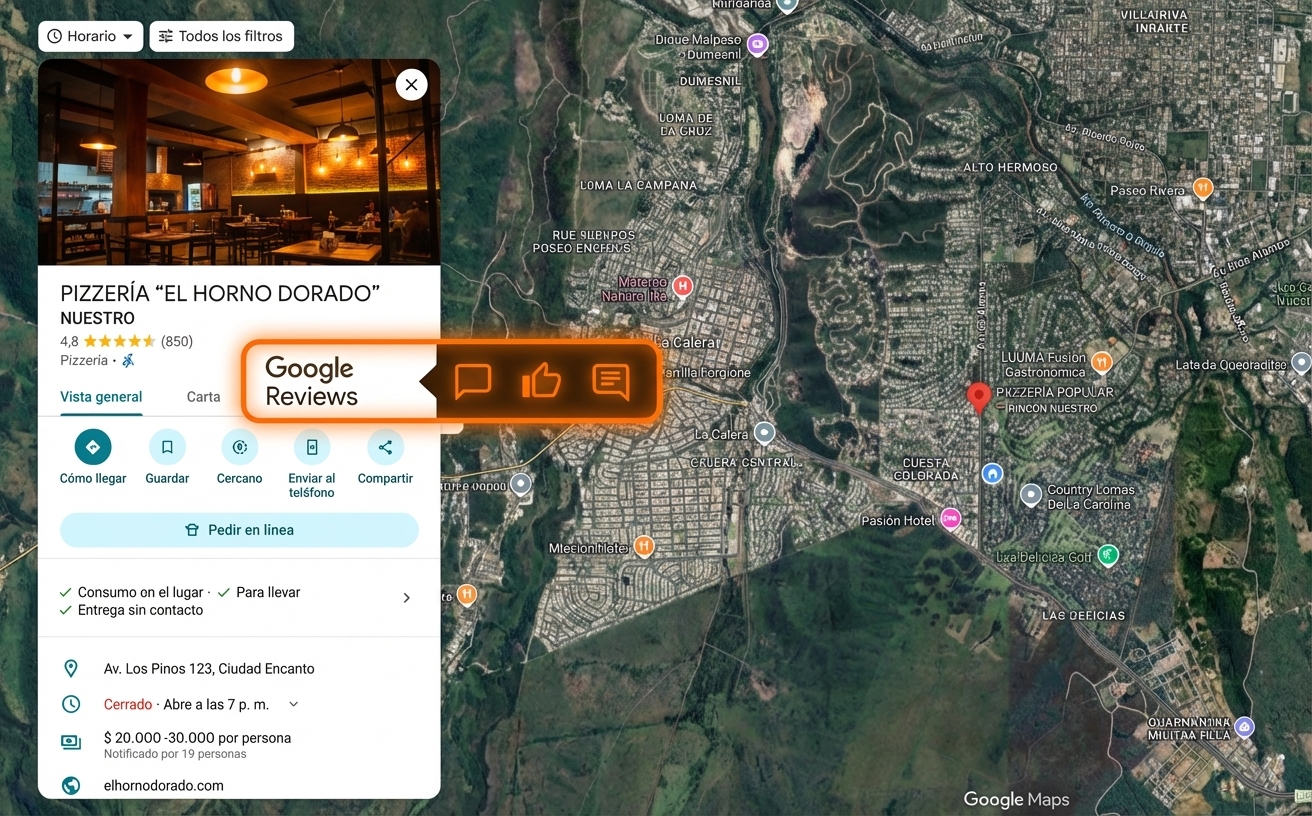
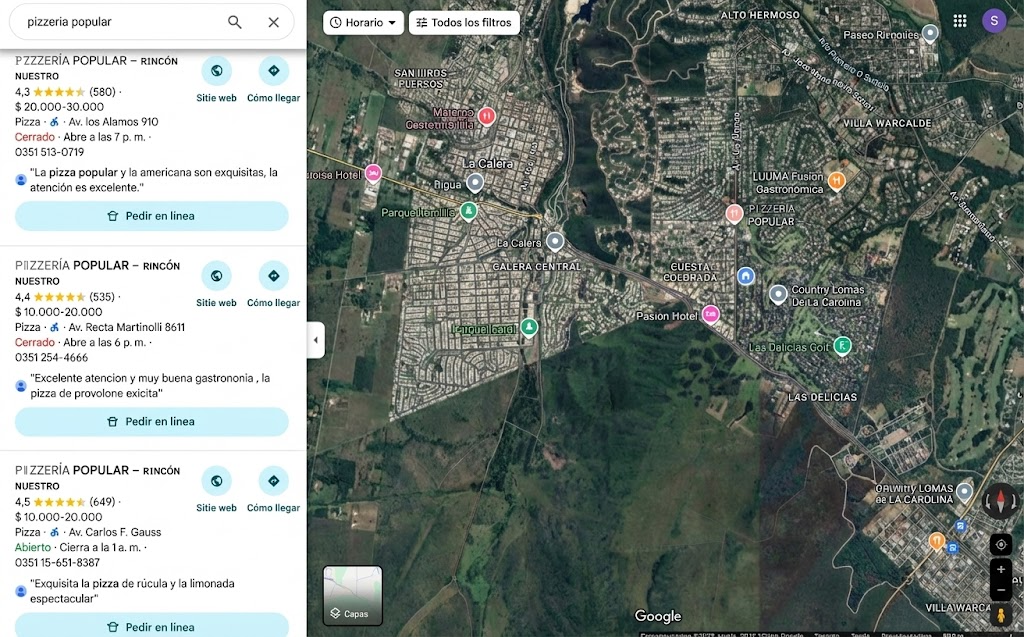
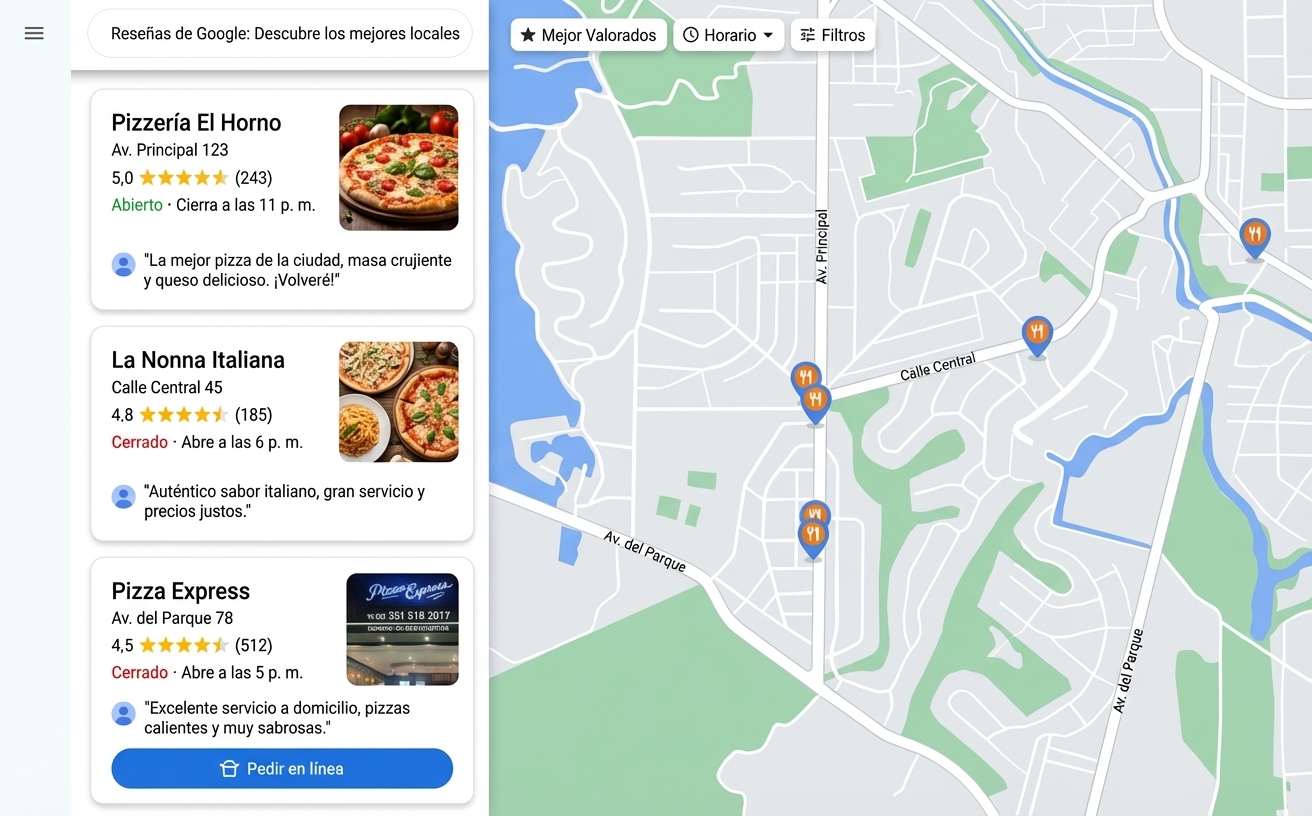
When a user searches for "italian restaurant near me", "pizza open now", or "best rated supermarket", Google shows a Map Pack.
Appearing in top results is not random. It is the outcome of accumulated profile signals.
For multi-location brands, each location competes on its own.
Factors that influence ranking
Google local results are mainly organized around:
- Proximity: user location relative to the business. This factor cannot be changed.
- Relevance: how aligned your profile is with the query (correct categories, optimized description, complete information).
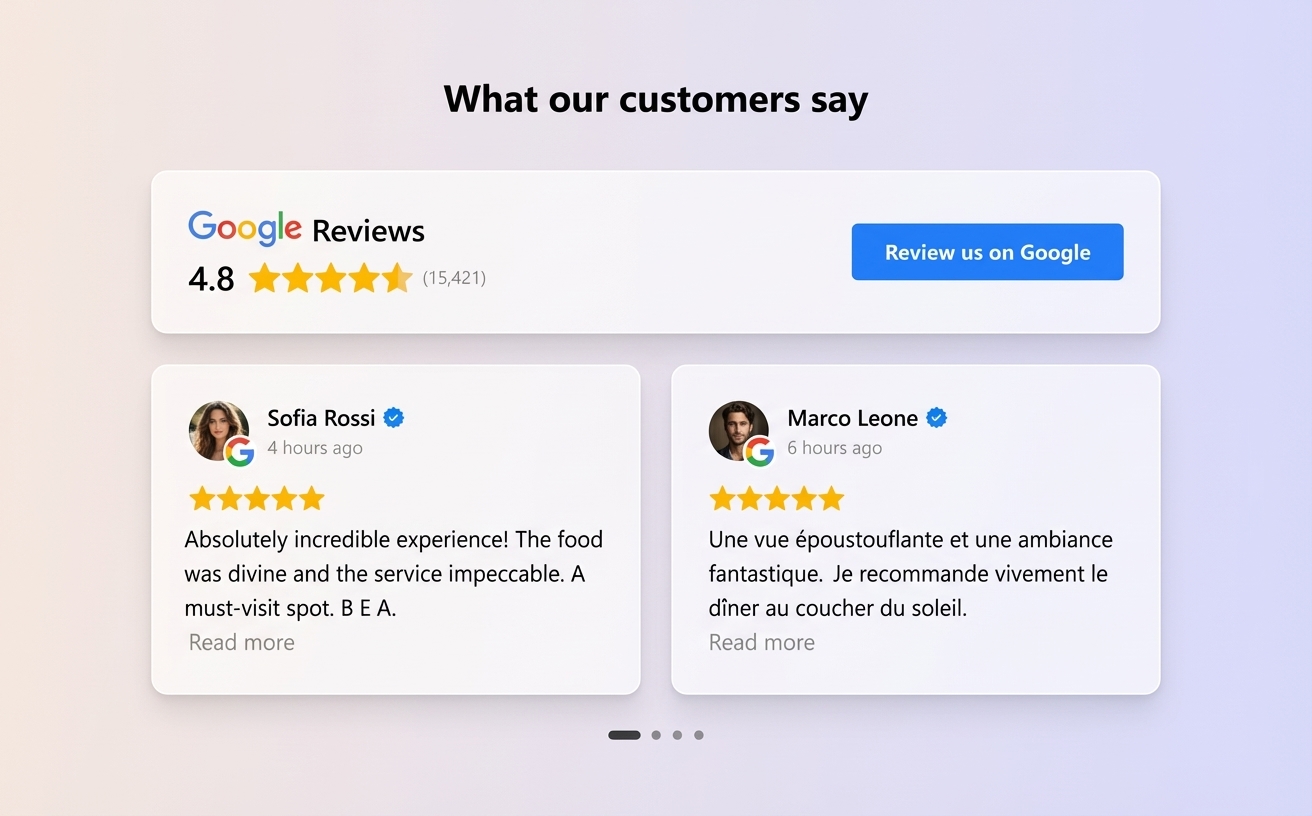
- Prominence: review volume, average rating, frequency of new reviews, responses, and profile activity.
- Prominence is built over time, and lost when consistency drops.
Why review frequency matters
A common mistake is requesting reviews only in short bursts: a 10-day campaign, many reviews, and then months with no activity.
Google rewards consistency. A steady review flow keeps the profile active, reinforces freshness, and increases user trust.
In large chains, this requires process, not good intentions.
The impact of responding to reviews
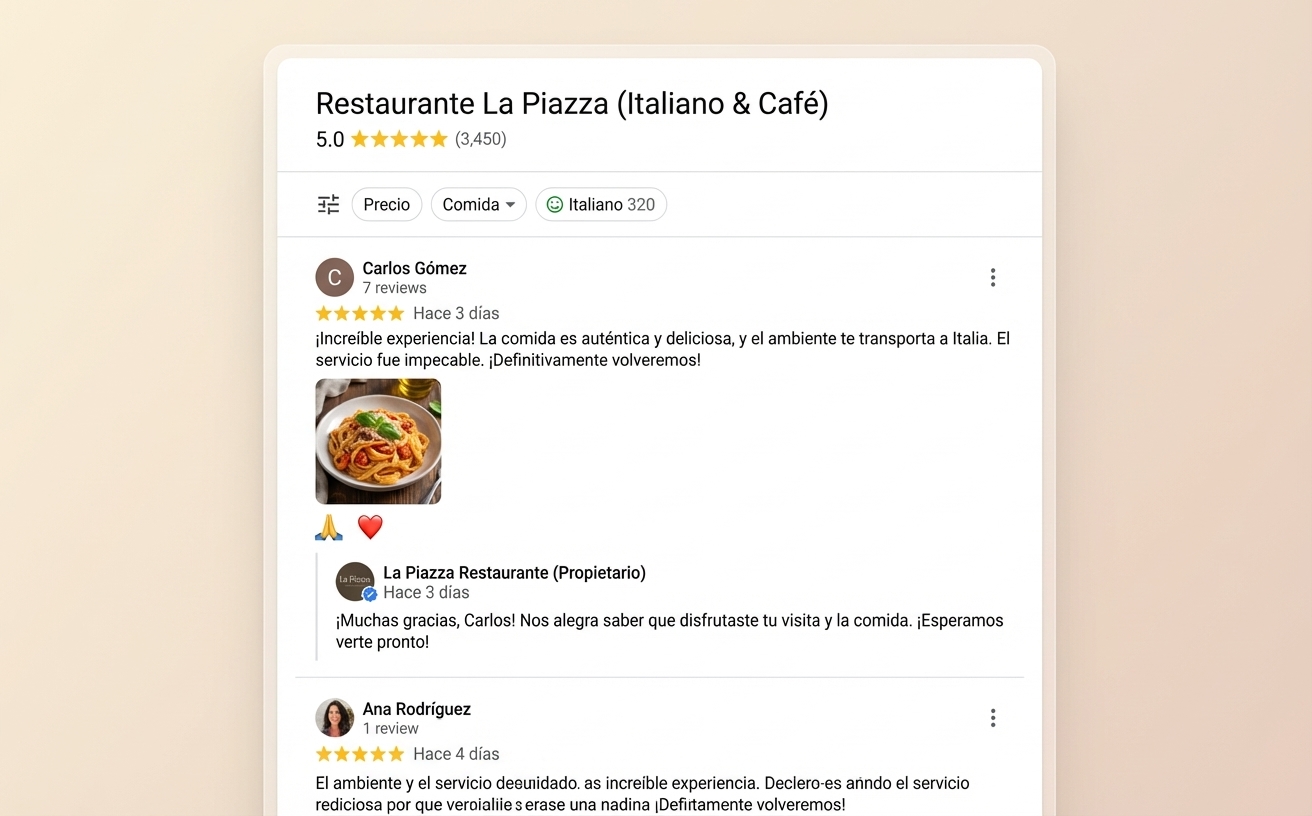
Replying to reviews is not only customer service. It signals activity, interaction, management, and trust.
In profiles with hundreds or thousands of reviews, response rate makes a clear difference.
Without a system, manual replies at scale are not viable.
The operational problem in chains
When you manage multiple locations:
- Each manager responds differently.
- There are no standards.
- Negative feedback is detected too late.
- There are no comparative metrics.
- There is no centralized control.
- Result: internal reputation variance and invisible locations.
A scalable positioning model
To improve Google Maps ranking across multiple locations, you need:
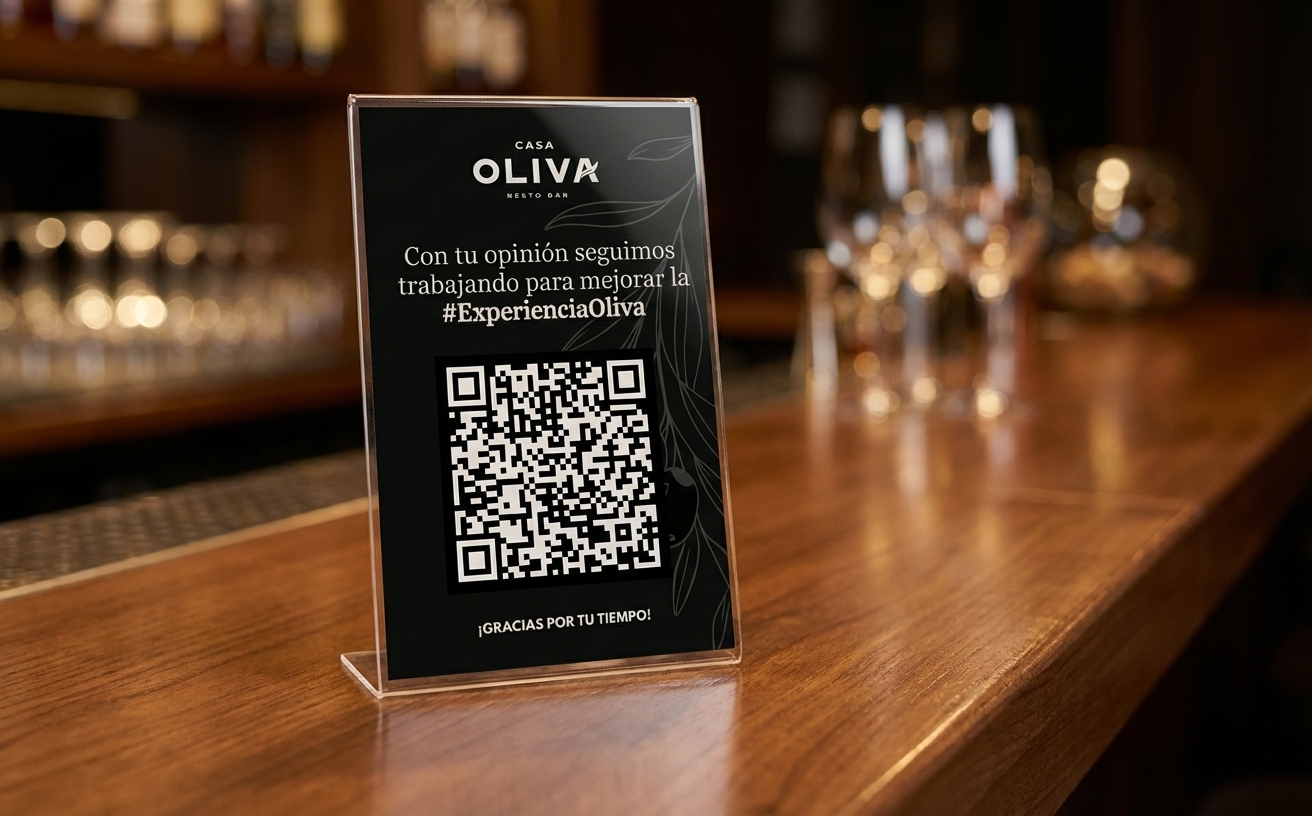
- Continuous review-generation system.
- Pre-review filter to detect dissatisfaction.
- Fast, consistent responses.
- Real-time monitoring.
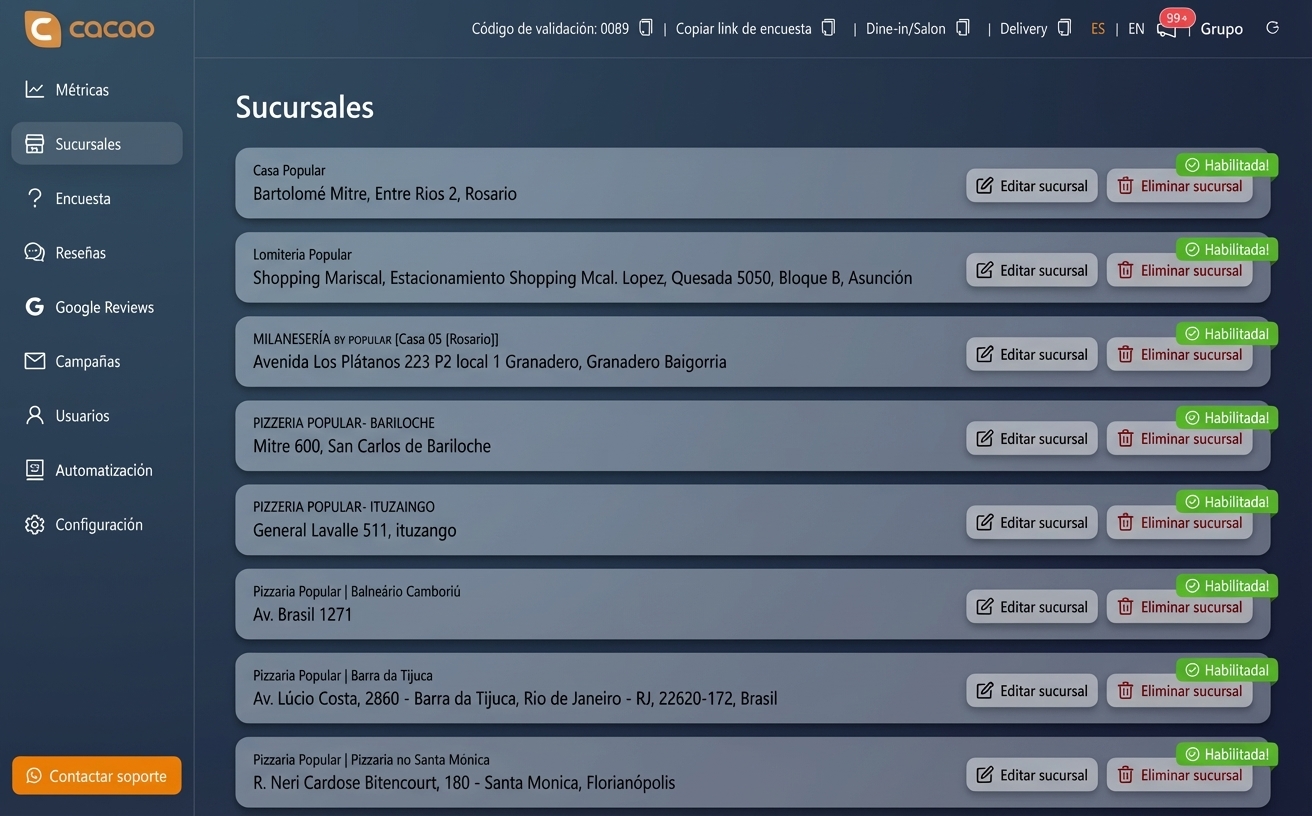
- Comparative dashboard across locations.
- Without this, growth depends on chance.
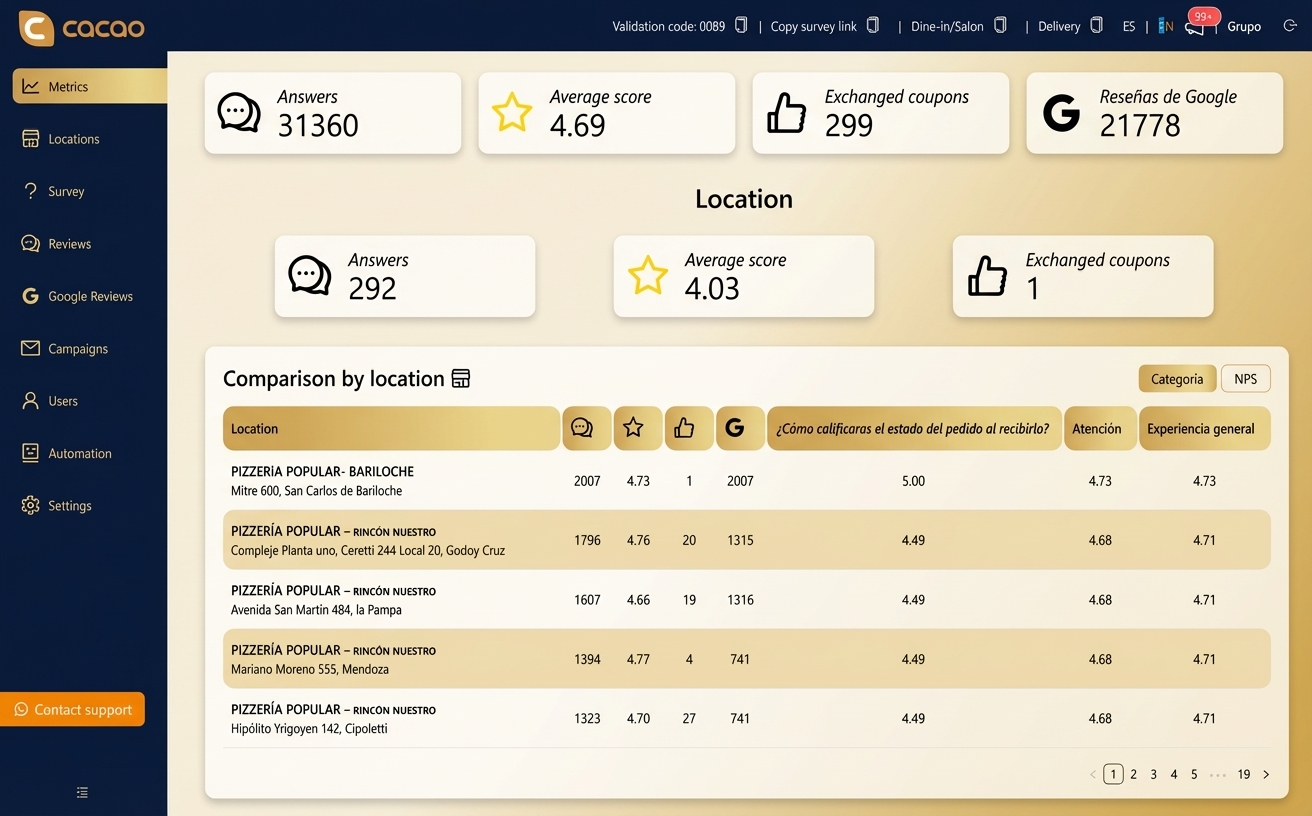
Real case: Pizzería Popular
120 locations. +40,000 reviews generated.
The key was not a campaign. It was implementing a consistent system for every location.
- Continuous flow.
- Centralized control.
- Location-level metrics.
- Structured response process.
- Result: sustained visibility growth in local searches.
Do you want to improve your ranking?
Google Maps positioning is not optimized once. It is managed continuously.
If your chain depends on local search to attract customers, you need a system that scales.
Turn Google Maps into a predictable acquisition channel
Request a demo and we will review each location with your team.
Request demoSuggested FAQ
Can you improve ranking without generating more reviews?
It is difficult. Reviews are one of the main prominence signals.
Does each location compete individually?
Yes. Google evaluates each business profile independently.
Does responding to reviews really matter?
Yes. Consistent profile activity is a positive signal for both users and the algorithm.
Is this only for restaurants?
No. It applies to any multi-location business with local presence.