Google Maps SEO for Multi-Location Chains
Control ranking for each location from a centralized dashboard and turn Google Maps into a real acquisition channel.
Request demoThe problem chains face
When you operate multiple locations, you do not compete only as a brand. You compete as individual locations.
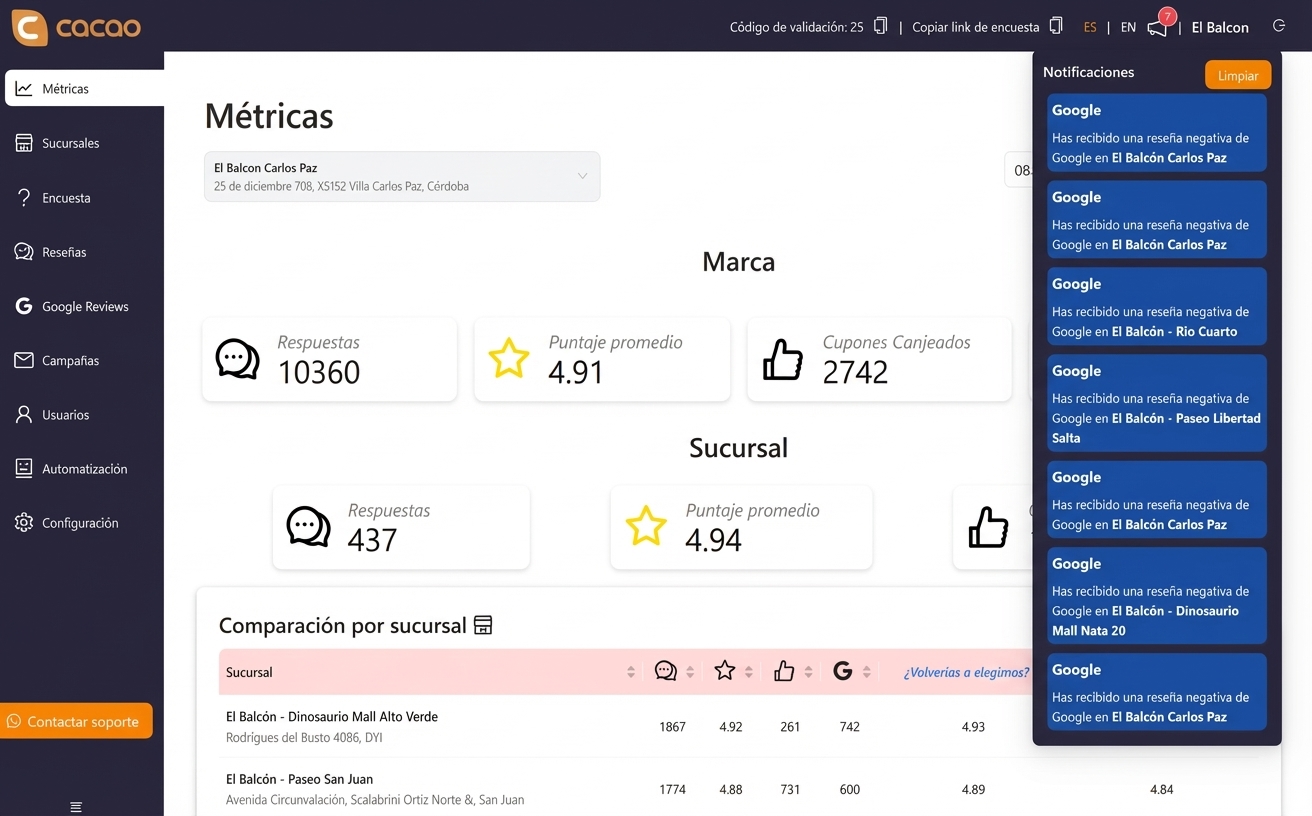
Each store has its own profile, reviews, reputation, and ranking.
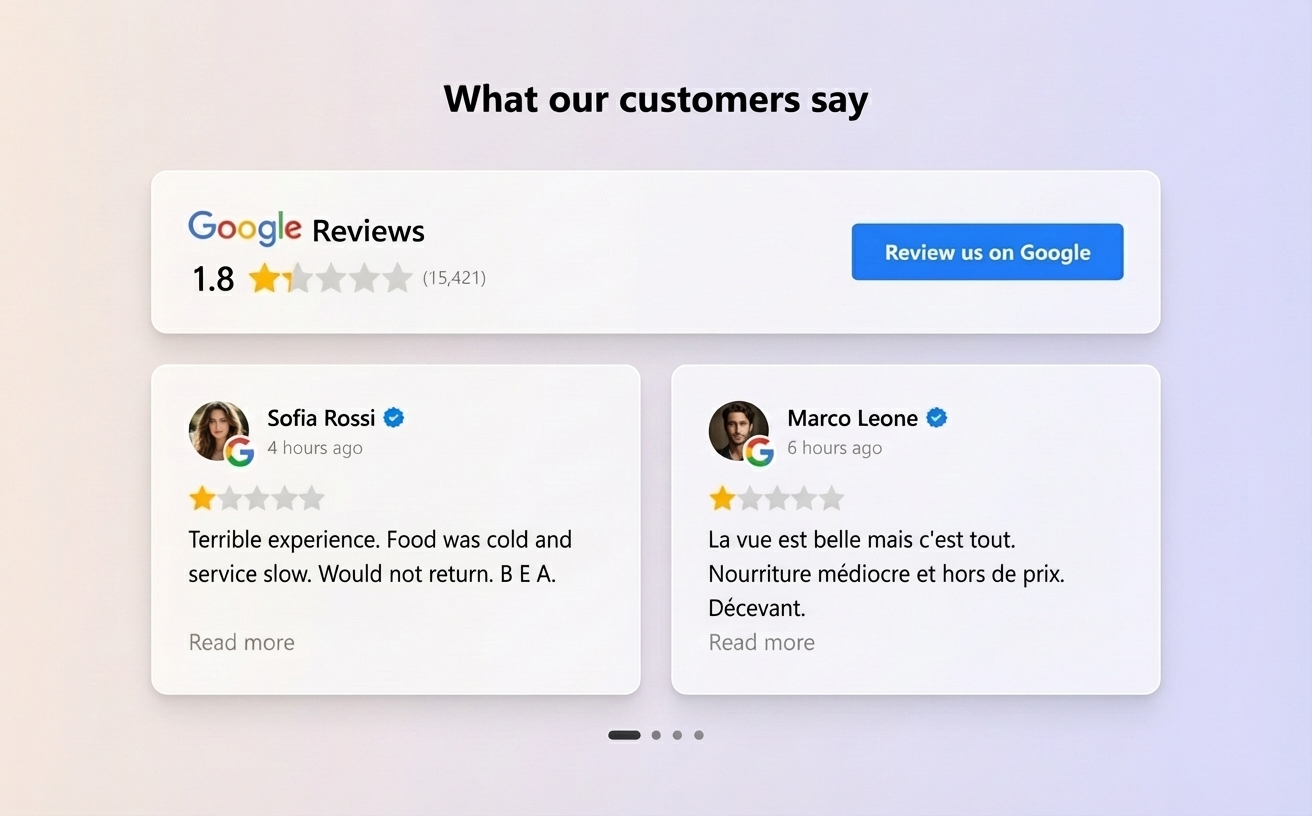
Without a unified system, some locations perform well while others lose visibility, accumulate unanswered negative reviews, and damage brand consistency.
This is not only a marketing problem. It is an operational problem.
How Google Maps works for chains
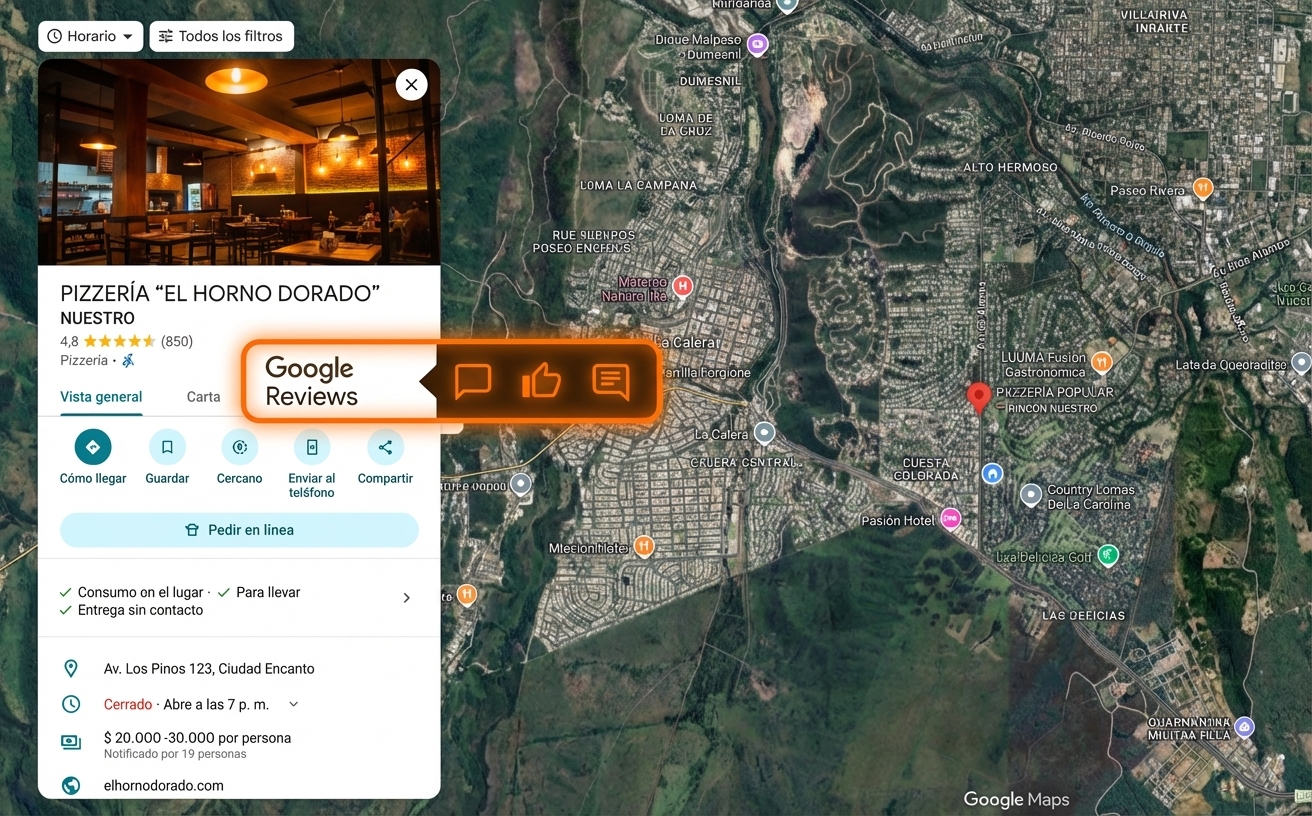
Google evaluates each profile independently, while customers perceive the brand globally.
A single poorly managed location can affect overall reputation, trigger local crises, and lose ranking against more active competitors.
The key is not only getting good reviews. It is maintaining a consistent system across all locations.
The traditional model does not scale
Many chains try to delegate execution to each store manager.
- Review requests only in short campaigns.
- Manual response workflows.
- Tracking from spreadsheets.
- Result: inconsistency, lack of metrics, and internal reputation variance.
- Google favors active and consistent profiles. That requires structure.
A scalable Google Maps SEO model for chains
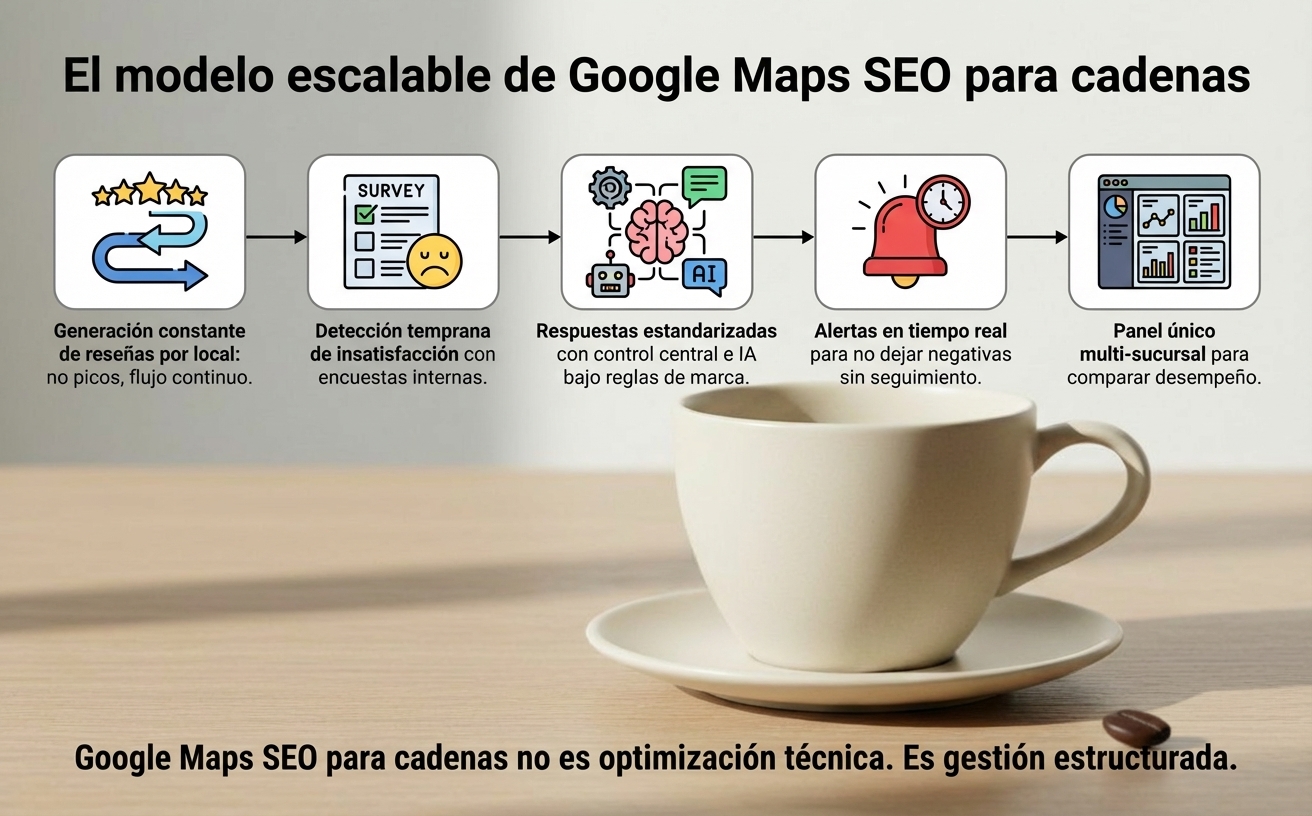
An efficient multi-location system needs:
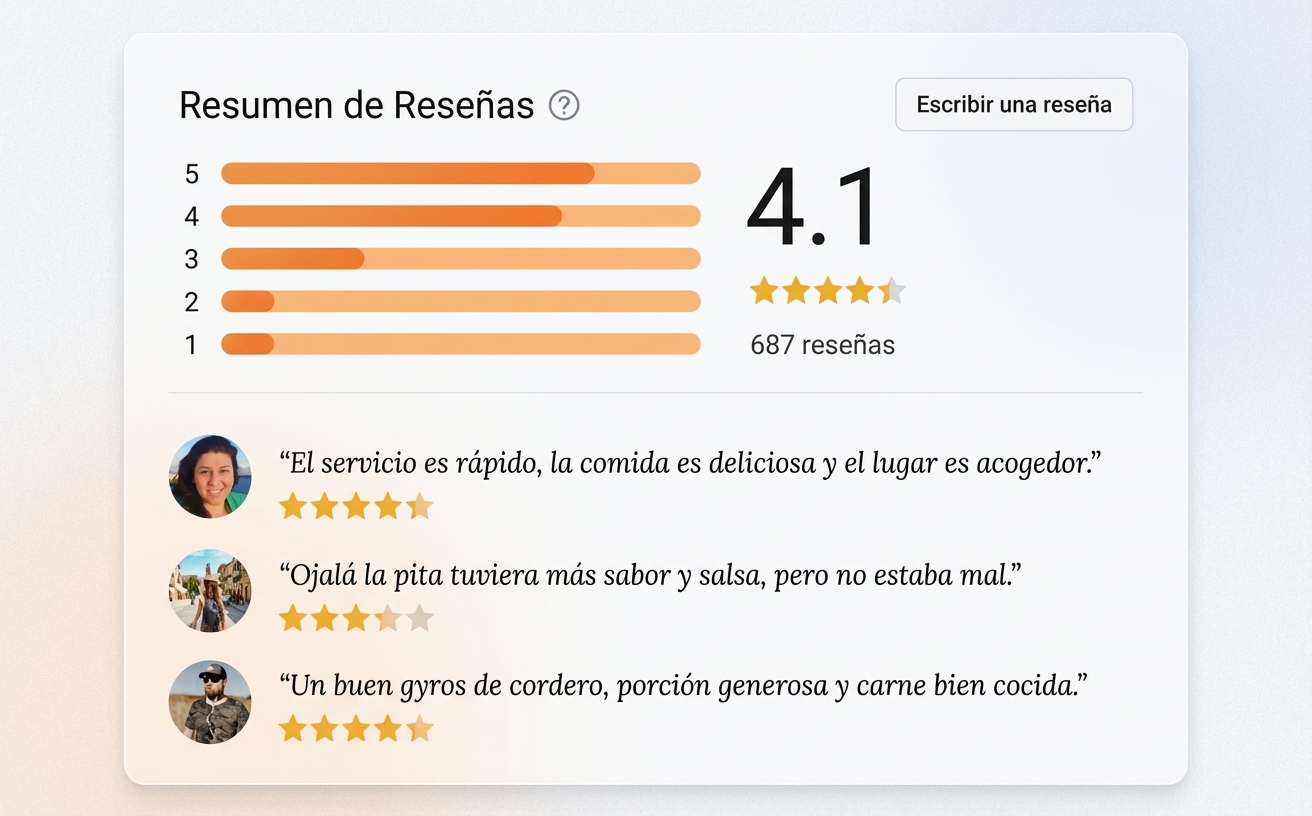
- Consistent review generation per location: not spikes, but continuous flow.
- Early dissatisfaction detection through internal surveys.
- Standardized responses with centralized control and AI under brand rules.
- Real-time alerts so no negative review goes unattended.
- One multi-location dashboard to compare performance.
- Google Maps SEO for chains is not just technical optimization. It is structured operations.
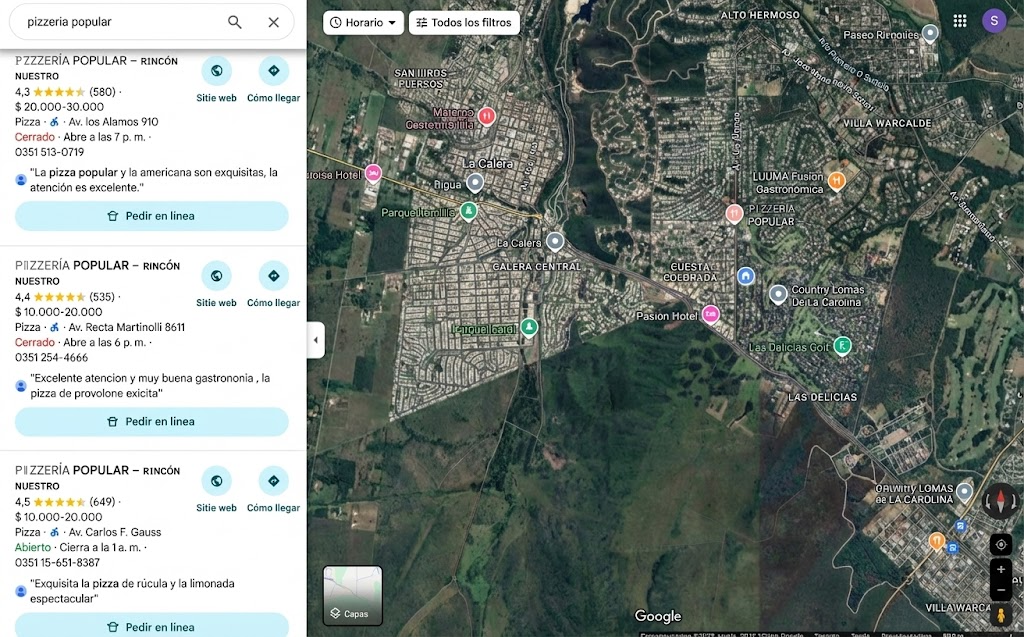
Real case: Pizzería Popular
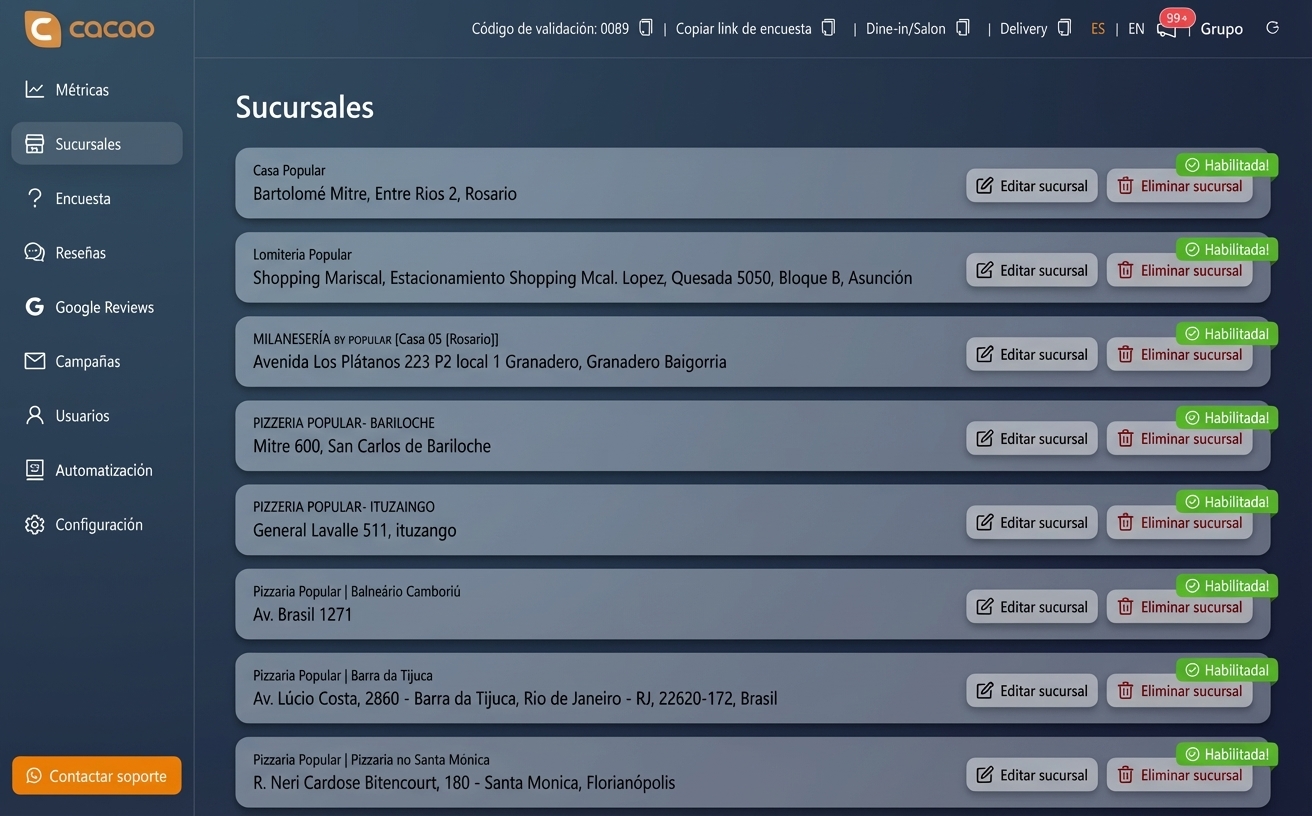
120 locations. +40,000 reviews generated.
The challenge was to unify process, standardize responses, increase visibility per area, and detect underperforming stores.
- Geo-targeted setup per location.
- Continuous review flow.
- Internal comparative dashboard.
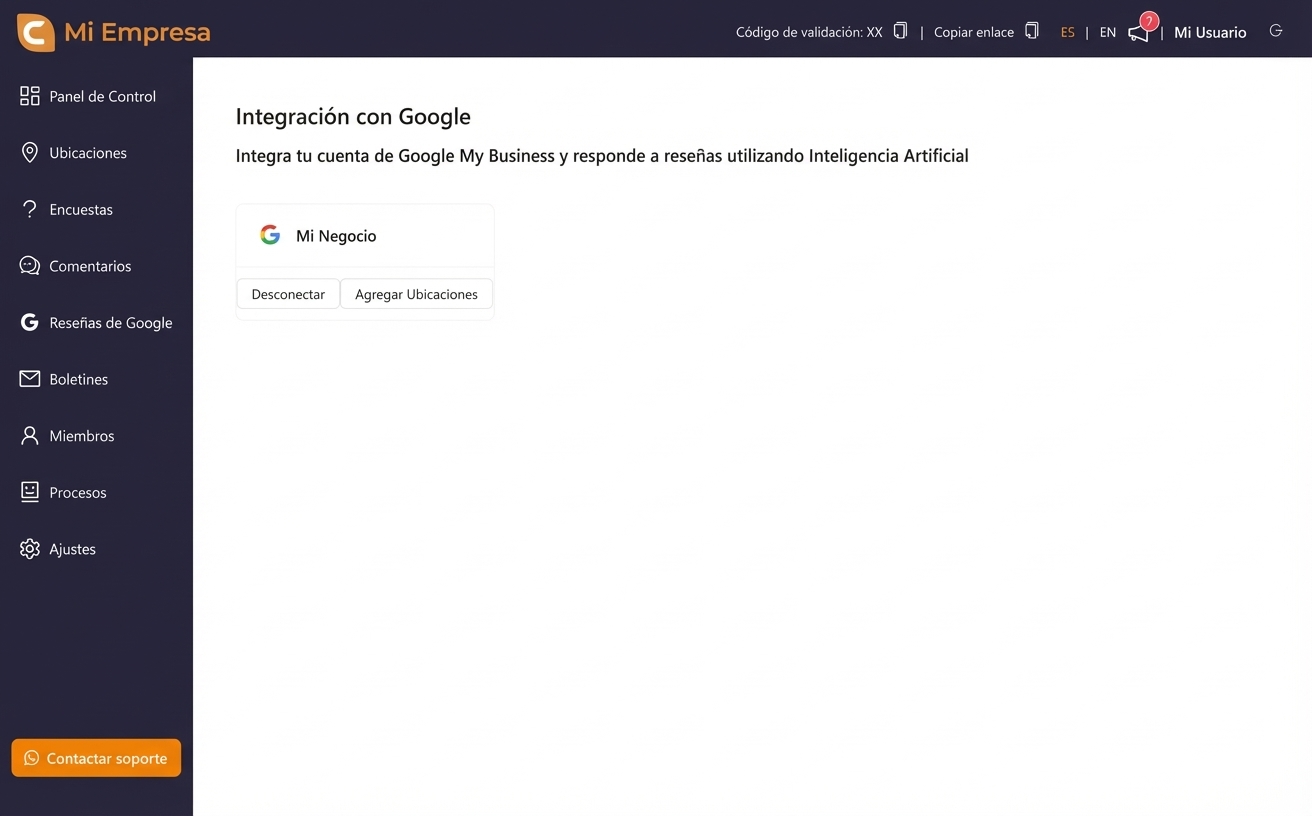
- Supervised automated responses.
- Result: stronger consistency, sustained growth, and better local ranking.
Operational integration
Google Maps SEO cannot be isolated from operations. It must be part of day-to-day execution.
Cacao can integrate with tools like Fudo, MR Comanda, and A CUCINA so review requests become a natural step in the customer flow.
KPIs you should be tracking
If you run a chain, you should track:
- Average rating by location.
- Monthly new review volume.
- Review generation frequency.
- Response rate and response time.
- Internal location-to-location comparison.
- If you are not measuring this, you are leaving ranking to chance.
Is your chain really leveraging Google Maps?
If Google Maps drives local traffic, high-intent searches, and immediate purchase decisions, it cannot be managed informally.
It needs structure.
Scale Google Maps SEO with centralized control
Request a demo and we will assess your operation location by location.
Request demoSuggested FAQ
Does each location need its own system?
No. You need one centralized system with distributed execution.
Can you automate without losing brand control?
Yes. You can define response rules, brand tone, and supervision layers.
Does Google Maps really impact sales?
Yes. Local searches often carry direct visit or contact intent.
Is this only for restaurants?
No. It also applies to retail, franchises, and any multi-location business.